

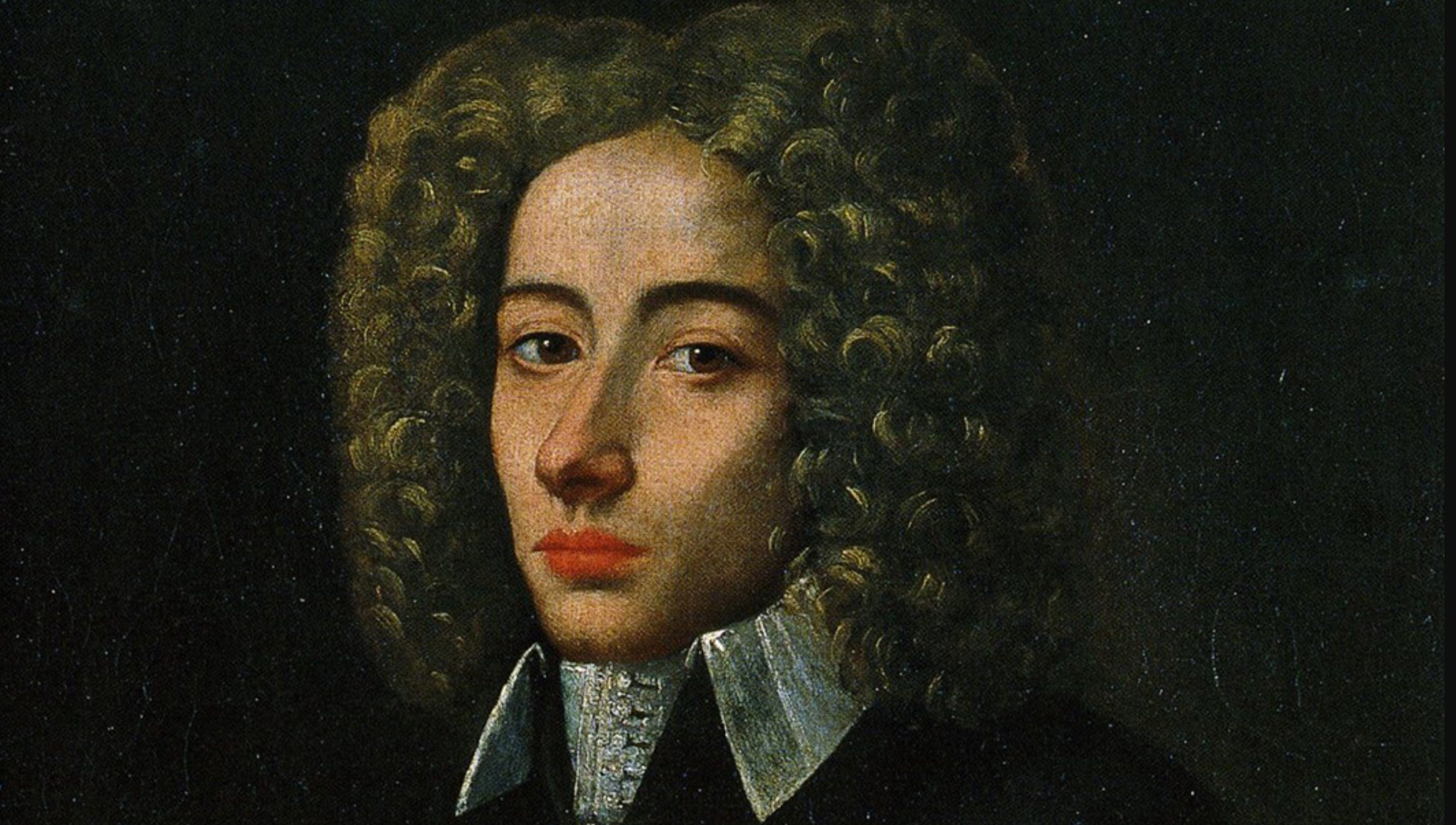

Pergolesi: Myth and Reality
The fate of Giovanni Battista Pergolesi was unquestionably singular. His life was remarkably brief, spanning merely five or six years of intense compositional activity (he was born in 1710 and died at the age of 26, in 1736), and during his lifetime his fame remained largely confined to Naples and Rome. His contemporaries certainly recognised his genius, yet his figure did not stand out markedly against the rich musical landscape of the time.
Following his death, a small group of compositions—including the intermezzi La serva padrona and Livietta e Tracollo, a limited selection of arias from the drammi per musica Adriano in Siria and L’Olimpiade, several cantatas, and especially the Salve Regina in C minor and the Stabat Mater—circulated widely throughout Europe. These works rapidly became objects of admiration and even veneration among music lovers.
Pergolesi’s international renown was consecrated in 1752 during the so-called Querelle des Bouffons, when the philosophes of the Enlightenment embraced his music—or at least the few works they were familiar with, particularly La serva padrona—as a banner of protest against the official art of the Ancien Régime. Rousseau, D’Alembert, and Diderot, among others, extolled its spontaneity, clarity, and naturalness, qualities that seemed to epitomise an ideal of artistic truth reclaimed from the artificiality of fashion and convention. “Pergolesi was born, and truth was revealed,” declared the composer André Modeste Grétry, in a striking and oft-quoted aphorism.
Yet this brief phase of reception—remarkable though it was—already entailed a distortion of Pergolesi’s artistic identity. The affinity between certain expressive features of his music—particularly its more openly emotional dimensions—and the tastes of pre-Romantic and Romantic sensibilities, together with the emergence of a literary mythos of the grand et malheureux composer, brilliant and tormented, hounded by fate and by his very own genius, eventually removed Pergolesi from his genuine aesthetic and historical context. He was reimagined as a lyrical symbol of European Romanticism.
As a result, certain aspects of Pergolesi’s output—especially its more sentimental features—were unduly amplified, while others of equal importance were neglected or dismissed. And since many of his authentic works failed to conform to the idealised image that audiences had constructed of him, it came to seem natural to attribute to Pergolesi other, stylistically more compliant pieces—regardless of authorship.
This led to a phenomenon as curious as it was telling: the proliferation of hundreds of apocryphal works, composed by lesser or little-known musicians, and in some cases by opportunists or outright forgers, which circulated under Pergolesi’s name.
It is only in recent decades that musicological scholarship has corrected these spurious attributions—reconstructing a corpus of unquestionably authentic works, and restoring Pergolesi’s biography to the realm of historical fact, free at last from the distortions of myth.