


Biographical Overview
The verified biographical data on Giovanni Battista Pergolesi remains scarce. He was born in 1710 in Jesi, into a modest family likely afflicted by serious hereditary health conditions. Within a few years, he had lost all his immediate relatives. He studied violin in his hometown and, around the age of thirteen, was sent to Naples to further his musical education at one of the city’s four conservatories, the Conservatorio dei Poveri di Gesù Cristo. There he studied under Gaetano Greco, Francesco Durante, and, briefly, Leonardo Vinci.
He made his debut with an oratorio composed for the Oratorians, La fenice sul rogo (March 1731), followed a few months later by the three-act sacred drama Li prodigi della Divina Grazia nella conversione e morte di San Guglielmo Duca d’Aquitania. This latter work includes a comic character who speaks in Neapolitan dialect, Captain Cuosemo, revealing for the first time Pergolesi’s vivid comedic talent. The favourable impression made by these works (combined with influential support in official circles) earned Pergolesi a commission that same year to compose an opera seria for Naples’ principal theatre, the Teatro San Bartolomeo. The libretto selected was a reworking of Apostolo Zeno’s Alessandro Severo (Venice, 1716), retitled Salustia. The opera premiered in late January 1732, after a troubled production marred by the death of the famous castrato Nicolò Grimaldi. It was withdrawn shortly thereafter, apparently with little success.
Nevertheless, Pergolesi’s reputation was already solid enough that, in September of the same year, his first comic opera, Lo frate ‘nnamorato, was staged at the Teatro dei Fiorentini. The libretto, by Gennarantonio Federico—who would become Pergolesi’s preferred collaborator—was a triumph, evidenced by its revival in 1734 and, remarkably, in 1748, twelve years after the composer’s death.
Pergolesi’s artistic and social ascent is reflected in two events from 1732. First, he entered the service of Prince Ferdinando Colonna of Stigliano, a key figure at the viceroyal court. Second, he received a commission from the city of Naples to compose a Mass and a Vespers in honour of Saint Emidius, the city’s chosen protector following a series of devastating earthquakes. In only two years, Pergolesi had engaged with the principal musical genres of the time: serious opera, comic opera, and sacred music.
In November 1732, he was appointed assistant organist at the Royal Chapel. The recommendation for his appointment highlighted the high expectations surrounding his compositional career, the success of Lo frate ‘nnamorato, and above all “the Chapel’s need for composers who write in the modern taste.” In other words, Pergolesi was already recognised as an exponent of the emerging galant style, distinct from the conventions of the late Baroque, and poised to spread across Europe.
The esteem in which he was held is further demonstrated by a new commission for the following season: another opera seria, Il prigionier superbo, based on a revised version of an old libretto by Francesco Silvani. Premiered on 28 August 1733, the work achieved notable success, thanks especially to its intermezzi La serva padrona, set once again to a brilliant libretto by Federico. Pergolesi reached the height of Neapolitan approval in February 1734, when he was named deputy maestro di cappella of the Faithful City of Naples, with the right to succeed the ageing Domenico Sarro.
Meanwhile, political upheavals rocked the Kingdom of Naples. On 10 May 1734, Charles of Bourbon entered the city after a swift military campaign and was crowned king six days later. The Austrians, who had ruled Naples since 1707, retreated to southern Italy and Sicily. Much of the Neapolitan nobility, particularly those loyal to the Habsburgs, withdrew to neutral Rome. Among the most reluctant to accept the new regime was Prince Colonna of Stigliano, Pergolesi’s patron, as well as other nobles who had supported him, including the Duke Caracciolo of Avellino (who fled to Vienna) and Duke Marzio IV Maddaloni Carafa. The latter, along with his wife Anna Colonna, invited Pergolesi to Rome in May 1734.
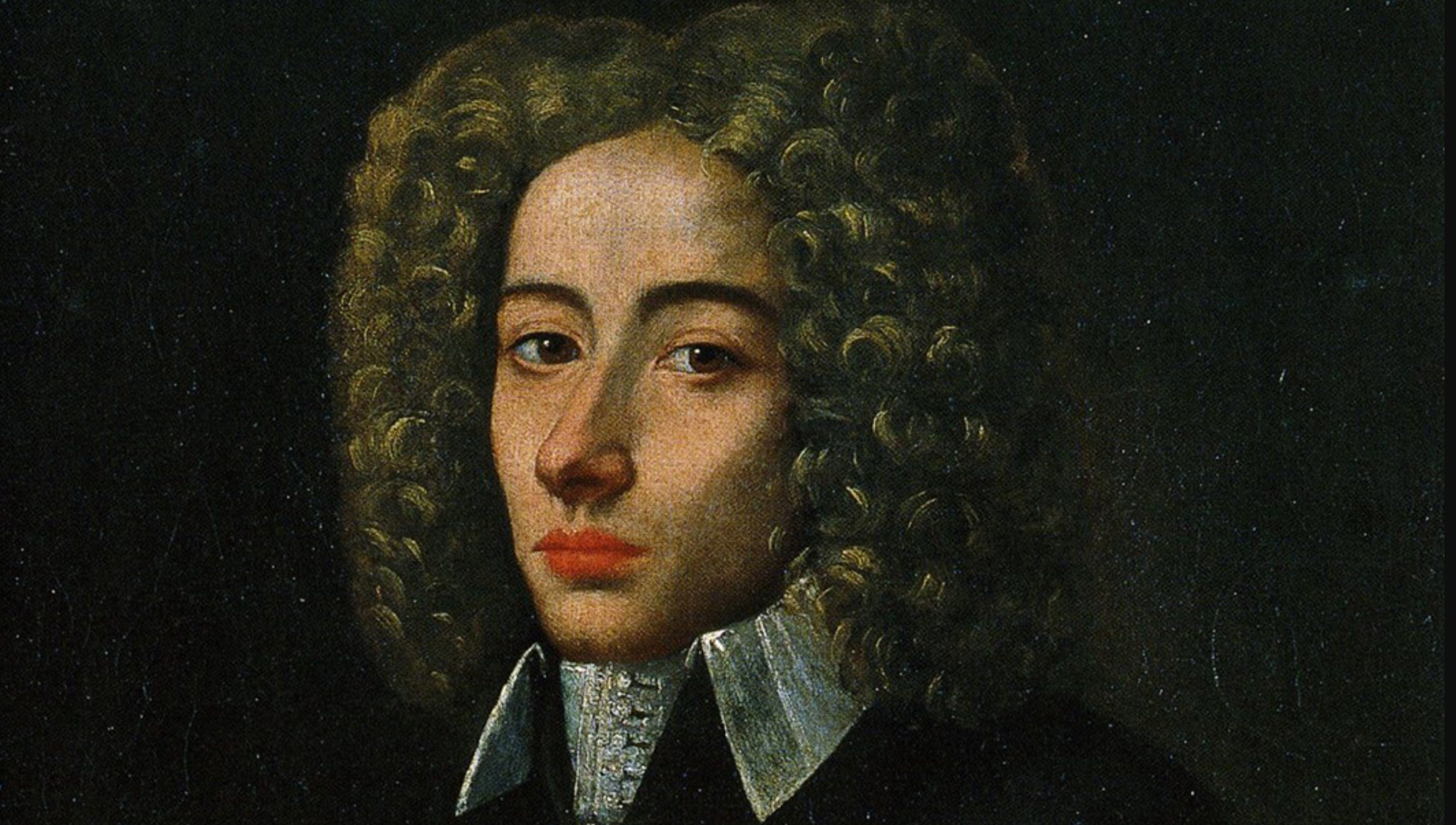
There, the caricaturist Pier Leone Ghezzi, intrigued by the young Neapolitan maestro, produced the only known likeness of Pergolesi. Initially sketching his face from life, Ghezzi later added the full figure from memory. The resulting portraits depict a stocky young man with strong, somewhat African features; in the full-body image, the left leg appears atrophied, suggesting polio—a far cry from the idealised, imaginary portraits that proliferated from the eighteenth century onward.
In Rome, Pergolesi conducted his Mass in F major (a revision of the earlier Mass for Saint Emidius) at the Church of San Lorenzo in Lucina—home of the Bohemian National Chapel—as part of a solemn service in honour of Saint John Nepomuk. Scored for soloists, four choirs, and two orchestras, the performance was both a significant artistic success and a highly political act: a bold declaration of loyalty to the Austrian Empire by the Maddaloni family. While it marked Pergolesi’s first triumph outside Naples, it also likely damaged his relations with the newly established Bourbon regime.
Pergolesi’s last appearance at Naples’ official theatre, the San Bartolomeo, occurred on 25 October 1734, with the staging of Adriano in Siria, set to a libretto by Metastasio and accompanied by the intermezzo Livietta e Tracollo. Despite the presence of the celebrated castrato Gaetano Caffarelli, the opera was not well received. His next opera, L’Olimpiade, was staged in Rome at the Teatro Tordinona in January 1735, while La serva padrona was revived concurrently at the Teatro Valle.
Upon returning to Naples, Pergolesi’s health appears to have declined abruptly. Still, he continued composing. In autumn 1735, his new comic opera Il Flaminio (libretto by Federico) premiered at the Teatro dei Fiorentini and enjoyed lasting success, as evidenced by frequent revivals beyond Naples. Around the same time, Pergolesi began work on a serenata commissioned for the wedding of Prince Raimondo di San Severo and Carlotta Gaetani dell’Aquila D’Aragona, scheduled for 1 December 1735 in Torremaggiore. The music, now lost, appears from the libretto to have been only partially completed due to Pergolesi’s illness.
Little is known about the composer’s final months. He was likely hosted by the Maddaloni family at a Capuchin convent in Pozzuoli, where he is thought to have composed the four chamber cantatas published posthumously, and—according to tradition—the Salve Regina in C minor and the Stabat Mater.
Pergolesi died of tuberculosis (tabe etica) on 17 March 1736, and was buried in a common grave at Pozzuoli Cathedral.
By the mid-eighteenth century, Pergolesi had already become a mythic figure—a myth that quickly spiralled into legend. The growing Romantic fascination with artistic genius and individual destiny clashed with the near-total absence of documentary evidence, leading to a proliferation of fantastical accounts of his life and works. His brief career unfolded within a society that respected the composer but still considered him a craftsman. Moreover, he was one among many exceptional Italian musicians who, from the 1730s onward, would spread their art throughout Europe’s major cultural centres.
Little more than fragmented recollections of Pergolesi remained, many of which were misinterpreted by foreign writers. These became the basis for the first biographies, themselves later transformed and romanticised during the nineteenth century. His musical legacy, preserved largely in manuscript form, was blurred by neglect and distortion: many works were forgotten, and a vast corpus of apocrypha was falsely attributed to him.
Only in recent decades has international musicological research restored Pergolesi’s authentic profile—one far more nuanced and compelling than the one inherited from tradition. His works reveal not only a refined and complex artistic personality, but also a full spectrum of eighteenth-century society, viewed from all angles: the vulgarity and slapstick of the comic stage, the tender bourgeois sentiment of musical comedy, the opulent melancholy of late-Baroque opera seria, the theatrical virtuosity of the great castrati, the incisive psychological dynamics of the intermezzi, the grandeur of sacred music, the emotional intimacy of devotional chamber works, where the sacred becomes a vehicle for personal feeling, and the rhythmic vitality and stylistic artifice of instrumental and chamber cantatas.
Pergolesi is all of this—and more. The study of his music continues to unveil a kaleidoscope of extraordinary invention, analysis, and synthesis. As for his life, Pergolesi remains elusive: a human and psychological presence that hides, irreducibly, behind his creations—much like the ironic, melancholic Pulcinella of the ingenious ballet that Igor Stravinsky would dedicate to him two centuries later.
Francesco Degrada